
Listen to this story · 7 min · narrated with an AI voice
What they made happen
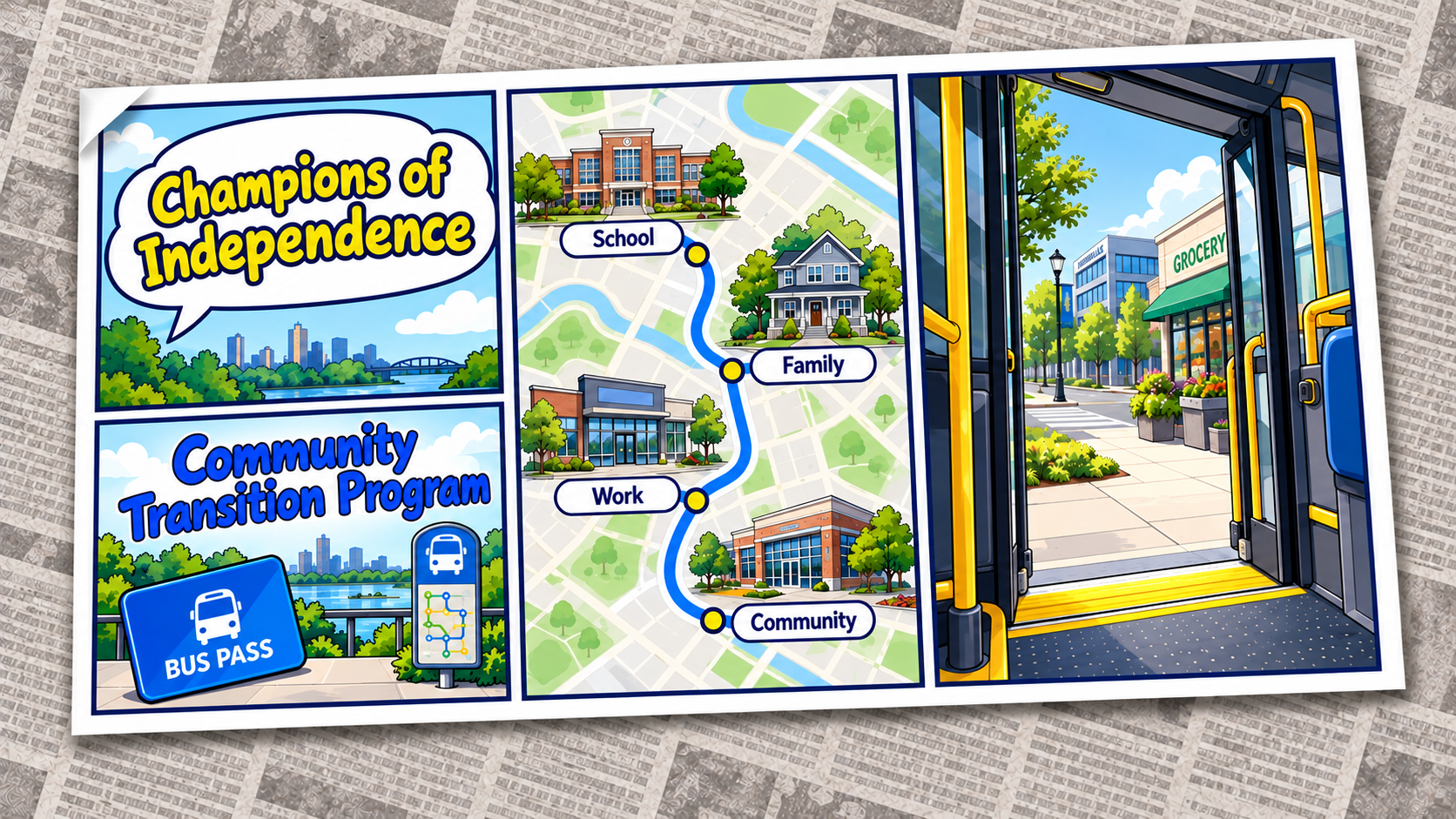
The bus pulls up. Its doors fold open. Is this the right route? Where’s my bus pass? Which stop is mine?
Most riders barely notice those questions. For young adults with disabilities in Springfield, Oregon, answering them is a step toward independence.
Sally Golden, Oregon’s 2025–26 Teacher of the Year, coordinates the Community Transition Program (CTP), where city bus training sits alongside cooking, shopping, work experience, and more, each taught in the places those skills are used. At CTP, the community is the classroom.
The lessons are practical. The stakes are personal. Every route a student learns can open doors well beyond school.
Her teacher-contributed national biography describes a program shaped by each student’s preferences, interests, needs and strengths, together with the expertise of her staff. That individualized design requires more than selecting an activity. It means bringing individual goals, practical instruction and the right people together so that learning has somewhere meaningful to go. CCSSO biography
Springfield Public Schools credits Golden with helping develop partnerships with dozens of businesses and agencies and helping students pursue further education and local employment. District report
Golden names community partners including St. Vincent de Paul, Salvation Army, Roaring Rapids Pizza, Next Step Recycling, Willamalane Parks & Recreation, Vocational Rehabilitation, Developmental Disabilities Services, and Lane Community College. She also highlights students’ participation in social communities and activities that strengthen overall physical, emotional and mental wellness. These are opportunities built through relationships, with students, colleagues and community partners contributing to the work.
One of the best feelings, Golden says, is walking into a local grocery store and seeing students she taught years ago still employed and still going strong. Often, that reconnection comes with a high five, a conversation, and a hug.
Meet the educator
Golden is a special education teacher and Community Transition Program coordinator serving young adults ages 18–21. Her teacher-contributed national profile describes instruction spanning employment, independent living, community participation and postsecondary education. Social skills, self-regulation and wellness are woven into that work. CCSSO biography
Her connection to Springfield is longstanding. She grew up and attended school there before returning to build her career in that same community, where she has served as a special education teacher since 2000. Her recognition as Oregon’s 2025–26 Teacher of the Year brought statewide attention to work rooted in familiar streets, local relationships and individual students’ futures. District account
What went into it
Golden’s work makes an easily overlooked part of public education visible. Springfield’s Community Transition Program (CTP) serves eligible young adults with disabilities after high school, through the school year in which they turn 21. This period creates opportunities to practice adult responsibilities and good citizenship with structured support. Staff also help connect students with adult service agencies, extending the planning beyond the point when district services end. Program announcement
That continuity is an important part of her contribution. Preparing someone for a workplace involves relationships with people beyond the teaching team. Planning for life after school involves listening to learners and working with families and community services. Golden’s biography explicitly recognizes her colleagues’ expertise, keeping the shared nature of this work visible. CCSSO biography
One of the most rewarding parts of this team approach to transition services, Golden says, is coordinating the engaging annual events CTP hosts and involving as many people as possible in the process. Students, educational assistants, parents, foster providers, administrators, custodians, specialists, teachers, other transition programs and community partners all contribute in meaningful ways to the Transition Spring Social, the Halloween Party & Costume Contest, the Holiday Lunch, a Job Developer Agency Event, the Transition’s Got Talent Show, Transition Night for incoming students, Graduation Festivities, and more.
Why it matters
When Oregon recognized Golden, state education director Charlene Williams described her perspective as seeing students as “at-hope.” The phrase captures an expectation worth taking seriously: young adults deserve opportunities to develop their abilities and contribute, with support responsive to who they are. Golden’s recognition as Oregon’s 2025–26 Teacher of the Year brings attention to this transition work and the educators who sustain it. Award announcement
The significance lies in the opportunities being created. A learner’s future needs more than encouragement. It needs places to practice, people willing to collaborate, and support that connects school with adult life. Golden’s story shows how an educator can help bring those conditions together while respecting that independence, participation and success will look different for each person.
A 2026 brief from the University of Minnesota’s Institute on Community Integration explains how work experiences during school can support later employment opportunities for young people with intellectual and developmental disabilities. It also emphasizes accommodations and employer support. This provides useful context for Golden’s community-based approach: preparation involves both developing skills and creating conditions in which people can use them. Research-based brief
Golden notes that young people with disabilities often face underemployment and barriers to meaningful competitive employment. At the Springfield Community Transition Program, she explains, the team works to teach young people with disabilities their own worth and to enlighten the local community on the value those individuals have to offer.
Bring the idea to your classroom
An adaptation could begin with a learner-selected goal that has a purpose beyond an assignment. Identify where the skill will be used, involve an appropriate community partner, and plan accessible opportunities to practice. Invite the learner to describe what worked and what support would help next. This is an editorial suggestion inspired by Golden’s work, not her verified lesson sequence.
Help Me Try This
Download Learning That Goes Places, the two-page teacher guide (PDF)
Reference sources: Springfield Public Schools’ October 3, 2025 announcement, the Oregon Teacher of the Year program announcement, Golden’s CCSSO biography, the district’s Community Transition Program page, and Sally Golden’s firsthand account, November 2026. The University of Minnesota brief provides research context and does not evaluate Springfield’s program.
Champions of Learning · Story card
Champion of Community-Based Independence
Sally Golden
Special education teacher · Community Transition Program · Springfield Public Schools
Editorial takeaway
Connect learning with the places, relationships and choices that give it purpose.
Springfield, Oregon, United States
Why this story matters: Golden connects individualized learning with community opportunities for young adults with disabilities.
Explore more educator stories.