
Listen to this story · 6 min · narrated with an AI voice
What they made happen
Through her digital platform Toddler Days with Ry, parent and early-learning activity creator Ryann Melendez Eaton designs accessible home activities that blend physical crafting with interactive family conversations [1]. Rather than buying expensive specialized educational kits or relying on digital screens, Eaton uses everyday materials like paper, markers, and household craft items to build structured play routines for young children.
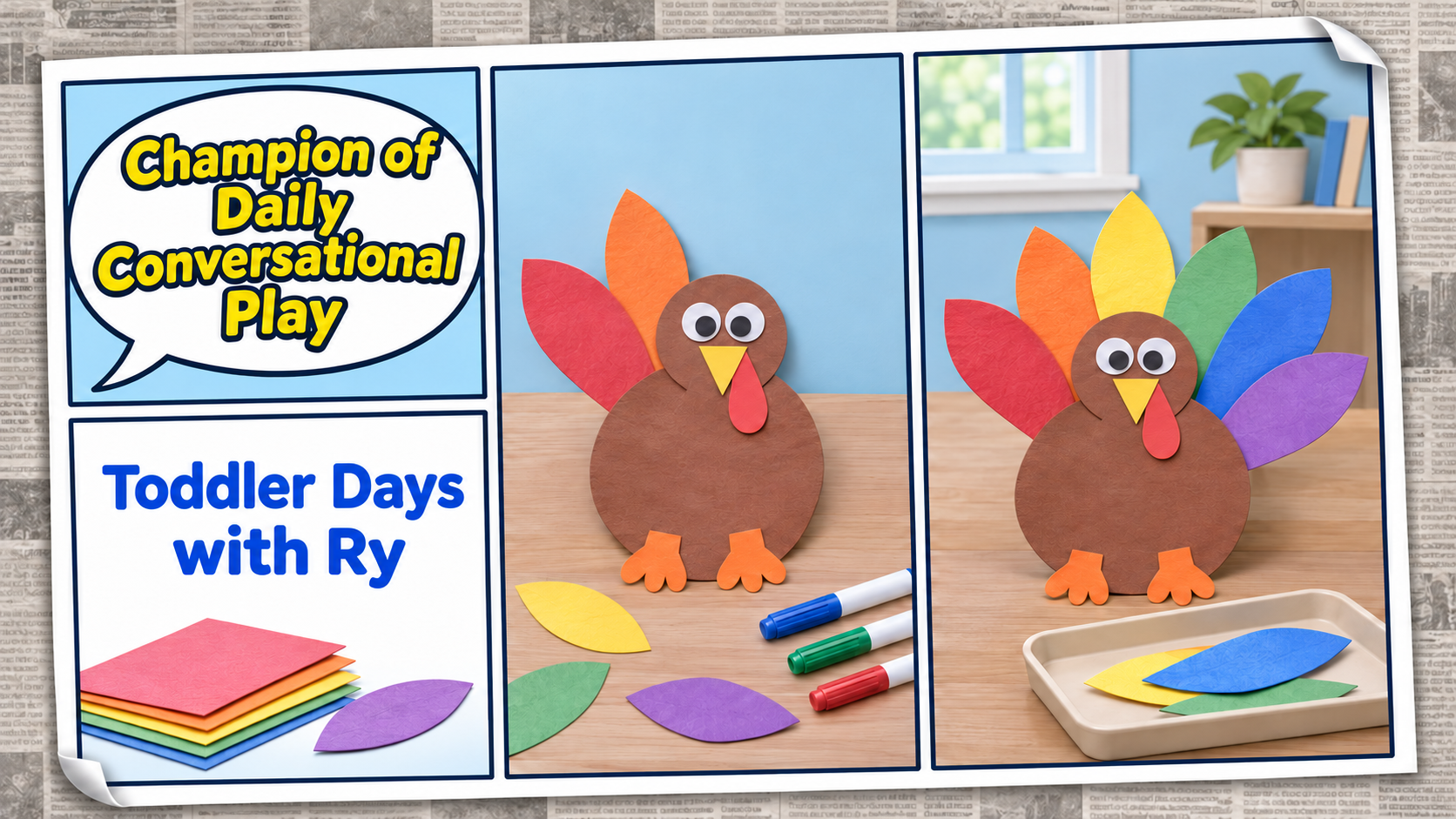
Her signature "thankful turkey" project transforms a traditional seasonal art craft into an ongoing daily reflection routine [2]. Instead of completing the activity in a single sitting, children attach craft feathers or visual markers over multiple days. Each piece represents a specific personal reflection or gratitude prompt shared during daily family conversations. Returning to the craft gives children and caregivers another opportunity to talk about what they notice and appreciate.
Watch Ryann’s thankful turkey Reel on Instagram
Eaton shares these activity guides, step-by-step templates, and video demonstrations on Instagram under the handle @toddlerdayswithry. Her public posts provide parents, caregivers, and early childhood educators with practical strategies for embedding intentional learning dialogue into routine home play.
Meet the educator
Ryann Melendez Eaton, also known online as Ry, is an early childhood activity creator based in the United States. Operating Toddler Days with Ry, she focuses on designing low-cost, low-prep learning activities tailored for toddlers and preschoolers.
Eaton approaches early learning from a caregiver's perspective, emphasizing play-based routines that do not require specialized teaching degrees or costly commercial software. Her work bridges early childhood play principles with practical home management, offering parents ideas for inviting conversation and sensory exploration with ordinary household items. Through her online platforms, she engages a growing community of families and caregivers who adapt her activity ideas for home environments and early care settings.
What went into it
Developing effective early childhood activities requires careful attention to developmental readiness, fine motor skills, and attention spans. Eaton structures her activities around low-barrier materials so families can participate without extensive preparation time or expensive supplies.
In designing the "thankful turkey" prompt, Eaton focused on creating a visual anchor that stays visible in the home over an extended period. Each feather or attachment point serves as a physical invitation for conversation. During daily interactions, caregivers prompt children to describe moments, people, or feelings they appreciate, translating abstract concepts like gratitude into concrete visual additions to the craft.
Eaton films and documents these activities step by step, demonstrating how caregivers can facilitate dialogue without overwhelming young children. She provides variations for different age levels, showing how to adapt simple paper crafts for younger toddlers developing motor control or older preschoolers expanding their spoken vocabulary.
Why it matters
Shared play can offer opportunities for responsive, back-and-forth interaction between a child and caregiver, an approach Harvard’s Center on the Developing Child describes as “serve and return” [3].
Ryann Melendez Eaton’s conversational craft offers a way for families to make room for such exchanges. The Harvard resource provides general developmental context. It did not study her activity, and no evidence reviewed here establishes that this particular craft improves vocabulary or emotional regulation.
Bring the idea to your classroom
Educators and caregivers can adapt Eaton’s "daily conversational craft" framework to foster reflection, oral language, and community in any early learning setting:
- Select an enduring visual anchor: Choose a multi-part visual craft (such as a reflection tree, a gratitude wall, or a daily growth chart) that can remain posted in the classroom or home for several weeks.
- Establish a short, routine prompt time: Set aside 3 to 5 minutes at a consistent time each day (such as morning circle or dinner time) to focus on a single reflection question.
- Connect talk to physical action: Have children add one piece to the craft (such as a leaf, feather, or paper link) as they speak their response, anchoring oral language to a physical artifact.
- Use accessible materials: Keep preparation minimal by using standard construction paper, markers, and clotheslines or tape, ensuring the focus remains on dialogue rather than complex assembly.
- Encourage family bridge building: Send simple home reflection prompts to families so children can continue conversational craft routines outside the classroom.
Help Me Try This
Download the teacher adaptation guide (PDF). A Champions of Learning adaptation inspired by this work.
Sources and credits
[1] Ryann Melendez Eaton, "Toddler Days with Ry (@toddlerdayswithry)," Instagram profile. Educational activity creation platform, play-based routines, and toddler learning resources. Read source
[2] Ryann Melendez Eaton, "Thankful Turkey Daily Activity Post," Instagram post. Description and visual guide for the interactive thankful turkey daily reflection activity. Read source
[3] Center on the Developing Child at Harvard University. (2019, May 15). “How-to: 5 Steps for Brain-Building Serve and Return.” Read source
Champions of Learning · Story card
Champion of Daily Conversational Play
Ryann Melendez Eaton
Early Learning Activity Creator and Parent | Toddler Days with Ry, United States
Editorial takeaway
A simple craft that grows over several days can give a family a reason to pause, listen and talk together.
Explore more educator stories.


